
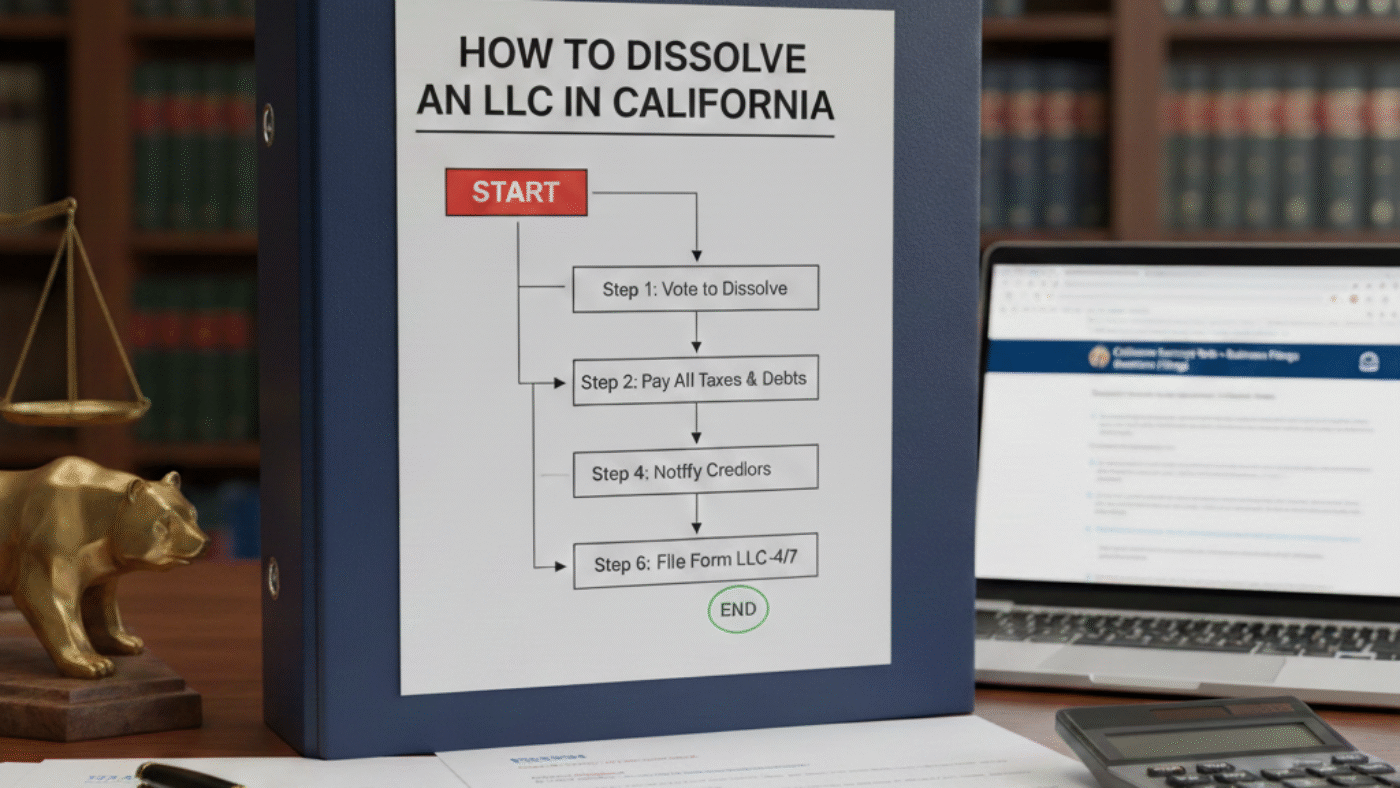
Dissolving a Limited Liability Company (LLC) in California may seem straightforward, but it requires careful attention to legal and financial details. Whether your business has achieved its goals, is no longer profitable, or you simply want to move on to other ventures, understanding the process ensures a smooth, compliant closure. Here’s a comprehensive guide on how to dissolve an LLC in California.
Step 1: Hold a Member Vote
The first step in dissolving a California LLC is internal. LLCs are governed by an operating agreement that usually outlines the process for dissolution. If your LLC has multiple members, a formal vote is typically required. California law generally requires that members approve dissolution in accordance with the operating agreement’s voting rules. If there is no specific rule, a majority vote of the members is sufficient. Document the decision to dissolve in writing for your records.
Step 2: File the Certificate of Dissolution
Once the members have approved the dissolution, the next step is filing the appropriate forms with the California Secretary of State. Most LLCs will file Form LLC-3 (Certificate of Dissolution).
- Single-member LLCs can also use Form LLC-4/7 (Certificate of Cancellation) if there are no debts or obligations.
- Multi-member LLCs must ensure all debts, liabilities, and obligations are addressed before filing.
The form can be submitted online, by mail, or in person. The filing confirms to the state that your LLC will cease operations and legally closes its existence in California.
Step 3: Settle Debts and Obligations
Before the dissolution is finalized, your LLC must settle all outstanding debts and obligations. This includes:
- Paying off suppliers, vendors, and contractors
- Settling employee wages and benefits
- Resolving any pending lawsuits or claims
If the LLC cannot pay all debts, members may need to contribute additional funds according to the operating agreement. Properly documenting the payment of debts is crucial to avoid future legal or tax issues.
Step 4: Notify Creditors and Close Accounts
California law requires notifying creditors and claimants of your intent to dissolve. This allows them to submit claims for any remaining debts. You should also close the LLC’s business bank accounts, cancel licenses and permits, and terminate contracts tied to the business. This step ensures that no ongoing obligations remain and reduces the risk of personal liability for LLC members.
Step 5: File Final Tax Returns
Dissolving an LLC in California also involves tax responsibilities. The LLC must file final federal and state tax returns, including any employment or sales taxes. California requires the payment of any outstanding LLC taxes or fees to the Franchise Tax Board (FTB). Ensure all filings indicate that they are final returns and that the LLC is no longer operating.
Step 6: File a Certificate of Cancellation
After debts are settled, creditors notified, and taxes filed, the final step is filing Form LLC-4/7 (Certificate of Cancellation) with the California Secretary of State. This form officially cancels the LLC’s registration and removes it from the state’s records. Once accepted, your LLC no longer exists legally, and members are released from most liabilities, provided all obligations were met.
Tips for a Smooth Dissolution
- Keep detailed records: Document every step, from member votes to debt payments.
- Consult a professional: An attorney or accountant can help ensure legal and tax compliance.
- Plan for taxes: California imposes an annual minimum franchise tax until the LLC is officially canceled.
Company formation knowledge is valuable when dissolving an LLC in California. Proper planning, filing, and compliance with both legal and financial obligations are essential. By following these steps holding a member vote, settling debts, notifying creditors, filing the correct forms, and handling taxes you can close your LLC efficiently and avoid future complications. This process provides a clear, structured, and legal way for business owners to end operations cleanly.
Add a Comment