How To Dissolve An LLC In California

How Do I Pay Myself From My LLC

If you’ve recently formed a Limited Liability Company (LLC), one of the most common questions you might have is: How do I pay myself from my LLC? Understanding the process is crucial not only for maintaining your personal income but also for ensuring compliance with tax regulations. The way you pay yourself depends largely on how your LLC is structured and how it is taxed.

1. Understand Your LLC’s Tax Classification

LLCs are unique in that they offer flexibility in taxation. By default, a single-member LLC is treated as a disregarded entity for tax purposes, meaning the IRS considers the business and the owner the same for income tax purposes. A multi-member LLC is treated as a partnership by default.

However, LLCs can also elect to be taxed as an S Corporation or a C Corporation. This choice affects how you pay yourself: whether through distributions, salary, or a combination of both. Knowing your tax classification is the first step in determining the proper way to pay yourself.

2. Paying Yourself as a Single-Member LLC

If your LLC is a single-member and you haven’t elected corporate taxation, the simplest method is through owner’s draws. An owner’s draw is money you take out of the LLC’s profits for personal use. Here’s how it works:

  1. Determine available funds: Only draw from profits, not business assets needed for operations.
  2. Transfer funds: Move money from your business account to your personal account.
  3. Record the draw: Track each draw in your accounting system to separate personal withdrawals from business expenses.

It’s important to note that owner’s draws are not subject to payroll taxes at the time of withdrawal. Instead, you pay income taxes on the LLC’s profits when filing your personal tax return using Schedule C.

3. Paying Yourself from a Multi-Member LLC

For multi-member LLCs, members are usually paid through distributions, which function similarly to owner’s draws but are divided according to each member’s ownership percentage. It’s crucial to formalize the distribution agreement in your LLC’s operating agreement to avoid disputes.

Like single-member LLCs, distributions are not considered wages, so payroll taxes are not withheld at the time of payment. Members report their share of profits on their personal tax returns.

4. Paying Yourself if Your LLC is Taxed as an S Corporation

If you’ve elected S Corp taxation, the rules change. In this case, you must pay yourself a reasonable salary as an employee of the corporation. This salary is subject to payroll taxes (Social Security, Medicare, etc.). Additional profits can then be taken as distributions, which are not subject to payroll taxes, potentially saving money on self-employment taxes.

For example:

  • Determine a reasonable salary based on your role and market standards.
  • Run payroll, withholding taxes appropriately.
  • Take remaining profits as distributions.

This hybrid approach is popular because it balances tax efficiency with compliance.

5. Keep Proper Records

No matter your LLC type, keeping clear records is essential. Use accounting software to track draws, distributions, and payroll. Proper documentation protects your personal assets and ensures accurate tax reporting.

6. Consult a Professional

Paying yourself from your LLC has tax and legal implications. Missteps can lead to penalties or increased tax liability. Consulting a CPA or tax professional can help you optimize your payments while staying compliant.

Conclusion

Formation documents play a crucial role in understanding how to pay yourself from your LLC and maintaining both your personal finances and your business’s financial health. Whether you take an owner’s draw, a member distribution, or a combination of salary and dividends, clear planning and proper record-keeping guided by your formation documents will ensure smooth operations and tax compliance. By following the rules outlined in these documents and knowing your LLC’s tax classification, you can confidently pay yourself while keeping your business in good standing.

How To Dissolve An LLC In California

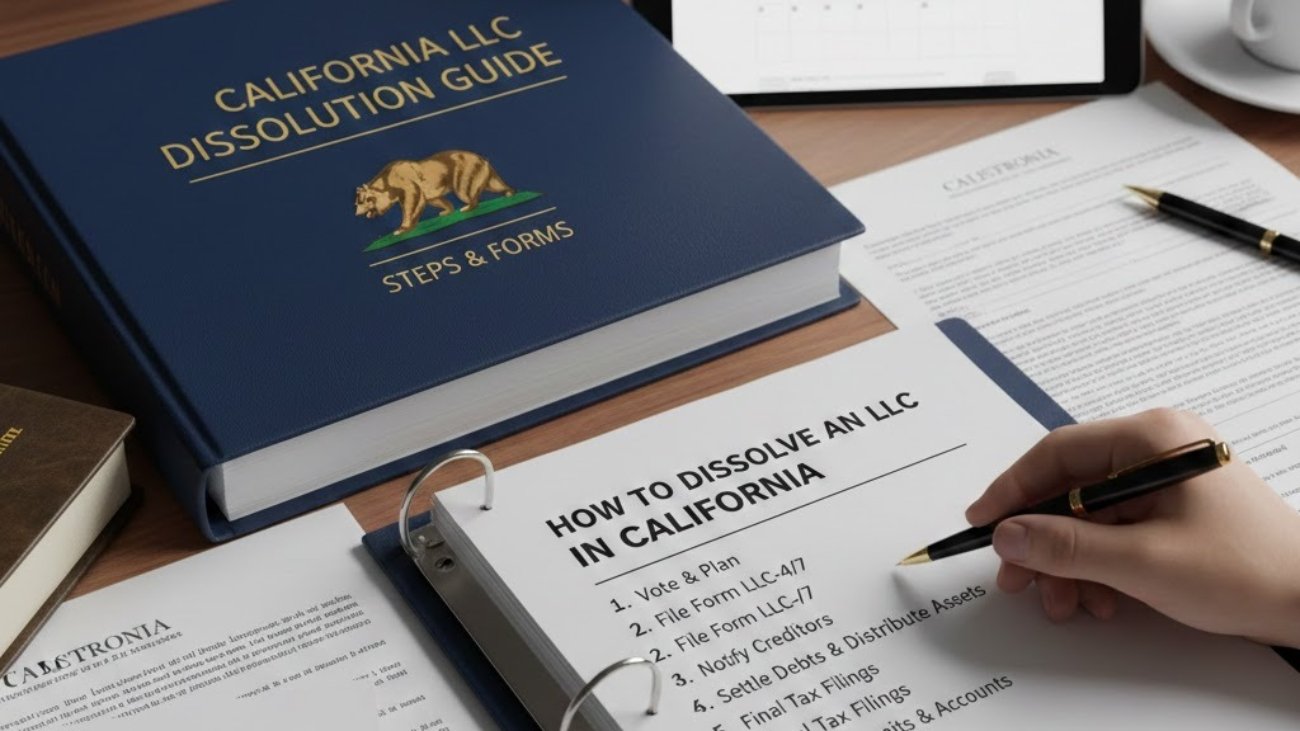
How To Dissolve An LLC In California

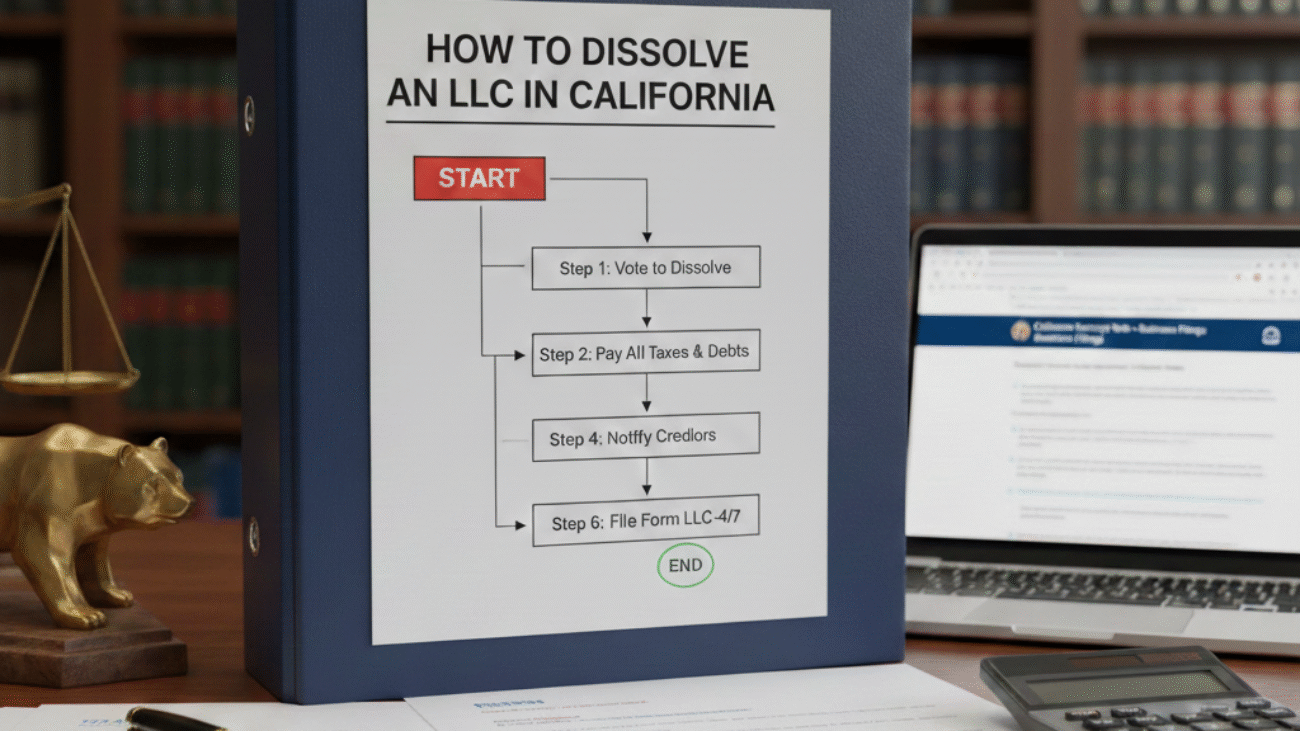
Dissolving a Limited Liability Company (LLC) in California may seem straightforward, but it requires careful attention to legal and financial details. Whether your business has achieved its goals, is no longer profitable, or you simply want to move on to other ventures, understanding the process ensures a smooth, compliant closure. Here’s a comprehensive guide on how to dissolve an LLC in California.

Step 1: Hold a Member Vote

The first step in dissolving a California LLC is internal. LLCs are governed by an operating agreement that usually outlines the process for dissolution. If your LLC has multiple members, a formal vote is typically required. California law generally requires that members approve dissolution in accordance with the operating agreement’s voting rules. If there is no specific rule, a majority vote of the members is sufficient. Document the decision to dissolve in writing for your records.

Step 2: File the Certificate of Dissolution

Once the members have approved the dissolution, the next step is filing the appropriate forms with the California Secretary of State. Most LLCs will file Form LLC-3 (Certificate of Dissolution).

  • Single-member LLCs can also use Form LLC-4/7 (Certificate of Cancellation) if there are no debts or obligations.
  • Multi-member LLCs must ensure all debts, liabilities, and obligations are addressed before filing.

The form can be submitted online, by mail, or in person. The filing confirms to the state that your LLC will cease operations and legally closes its existence in California.

Step 3: Settle Debts and Obligations

Before the dissolution is finalized, your LLC must settle all outstanding debts and obligations. This includes:

  • Paying off suppliers, vendors, and contractors
  • Settling employee wages and benefits
  • Resolving any pending lawsuits or claims

If the LLC cannot pay all debts, members may need to contribute additional funds according to the operating agreement. Properly documenting the payment of debts is crucial to avoid future legal or tax issues.

Step 4: Notify Creditors and Close Accounts

California law requires notifying creditors and claimants of your intent to dissolve. This allows them to submit claims for any remaining debts. You should also close the LLC’s business bank accounts, cancel licenses and permits, and terminate contracts tied to the business. This step ensures that no ongoing obligations remain and reduces the risk of personal liability for LLC members.

Step 5: File Final Tax Returns

Dissolving an LLC in California also involves tax responsibilities. The LLC must file final federal and state tax returns, including any employment or sales taxes. California requires the payment of any outstanding LLC taxes or fees to the Franchise Tax Board (FTB). Ensure all filings indicate that they are final returns and that the LLC is no longer operating.

Step 6: File a Certificate of Cancellation

After debts are settled, creditors notified, and taxes filed, the final step is filing Form LLC-4/7 (Certificate of Cancellation) with the California Secretary of State. This form officially cancels the LLC’s registration and removes it from the state’s records. Once accepted, your LLC no longer exists legally, and members are released from most liabilities, provided all obligations were met.

Tips for a Smooth Dissolution

  • Keep detailed records: Document every step, from member votes to debt payments.
  • Consult a professional: An attorney or accountant can help ensure legal and tax compliance.
  • Plan for taxes: California imposes an annual minimum franchise tax until the LLC is officially canceled.

Company formation knowledge is valuable when dissolving an LLC in California. Proper planning, filing, and compliance with both legal and financial obligations are essential. By following these steps holding a member vote, settling debts, notifying creditors, filing the correct forms, and handling taxes you can close your LLC efficiently and avoid future complications. This process provides a clear, structured, and legal way for business owners to end operations cleanly.

How To Close An Llc In California

How To Close An LLC In California

Closing a business is never an easy decision, but if you’ve decided it’s time to shut down your limited liability company, understanding how to close an LLC in California can save you time, money, and unnecessary stress. California has specific legal and tax requirements for dissolving an LLC properly, and skipping steps can lead to ongoing fees or penalties. This guide walks you through the process from start to finish.

Step 1: Review Your Operating Agreement and Get Member Approval

Before taking any formal action, review your LLC’s operating agreement. Most agreements outline the procedure for dissolving the company, including required member votes. If your LLC has multiple members, you’ll usually need a majority or unanimous vote to approve the dissolution. Document this decision in writing and keep it with your business records.

If your LLC does not have an operating agreement, California law generally requires the approval of at least 50% of the members to proceed with dissolution.

Step 2: Wind Up Business Operations

Once dissolution is approved, you must “wind up” your LLC’s affairs. This means stopping regular business activities and taking care of outstanding obligations. Common wind-up tasks include:

  • Notifying employees, clients, and vendors
  • Collecting outstanding payments owed to the LLC
  • Paying remaining debts, bills, and liabilities
  • Closing business bank accounts
  • Canceling licenses, permits, and registrations

California law requires that all known debts be paid or adequately provided for before the LLC is officially closed.

Step 3: File Dissolution Forms with the California Secretary of State

A crucial part of learning how to close an LLC in California is filing the correct paperwork with the Secretary of State (SOS).

Most LLCs must file two forms:

  1. Certificate of Dissolution (Form LLC-3)
  2. Certificate of Cancellation (Form LLC-4/7)

However, some LLCs may qualify for Short Form Cancellation (Form LLC-4/8) if they meet specific requirements, such as:

  • The LLC was formed within the last 12 months
  • It has no debts or liabilities
  • It has not conducted significant business

There is currently no filing fee for these forms, which helps keep closure costs low.

Step 4: File Final California and Federal Tax Returns

Even after business operations stop, tax obligations remain. You must file a final California LLC tax return with the Franchise Tax Board (FTB) and check the box indicating it is a final return.

Depending on your LLC’s tax classification, you may also need to file a final federal return with the IRS. Be sure to issue final Schedule K-1s to members if required.

Important note: California generally requires the $800 annual franchise tax until the LLC is officially canceled. Failing to file dissolution paperwork promptly can trigger additional tax liability.

Step 5: Notify the Franchise Tax Board and Other Agencies

After filing your final return, ensure all tax accounts are settled. If your LLC had employees, you must also file final payroll reports and notify the Employment Development Department (EDD). This step prevents future compliance notices or penalties.

Step 6: Keep Records of the Closure

Even after your LLC is closed, keep dissolution documents, tax filings, and financial records for at least several years. These records can protect you if questions or audits arise later.

Final Thoughts

Before you decide to close your LLC, it’s important to remember how you initially open your company in California, because the steps to legally shut it down are very different from starting it. Closing your LLC properly ensures you avoid unnecessary fees, taxes, and legal complications.

LLC for Non-US Residents

How to Open an LLC for Non-US Residents

Starting a business in the United States is a popular choice for entrepreneurs around the world. Thanks to a strong legal system, global credibility, and access to international markets, the U.S. is an attractive place to form a company. The good news? You do not need to be a U.S. citizen or resident to open a Limited Liability Company (LLC). Here are the steps through which you can understand about everything of an LLC for Non-US Residents.

What Is an LLC and Why Is It Ideal for Non-Residents?

A Limited Liability Company (LLC) is a flexible business structure that combines the simplicity of a sole proprietorship with the liability protection of a corporation. For non-US residents, an LLC is appealing because:

  • It protects personal assets from business liabilities
  • It has fewer compliance requirements than corporations
  • It allows pass-through taxation in many cases
  • It can be 100% foreign-owned

This makes an LLC one of the easiest and most cost-effective ways for international entrepreneurs to operate legally in the U.S.

Step 1: Choose the Right State

Non-US residents can form an LLC in any U.S. state, but some states are more business-friendly than others. The most popular choices include:

  • Delaware – Known for business-friendly laws and strong privacy
  • Wyoming – No state income tax and low annual fees
  • Florida – Ideal if you plan to operate or hire in the state

If you will have a physical presence, employees, or customers in a specific state, it’s often best to form your LLC there.

Step 2: Select a Unique LLC Name

Your LLC name must be unique within the chosen state and include “LLC” or “Limited Liability Company.” Before filing, check name availability on the Secretary of State’s website for that state.

Avoid restricted words such as “bank,” “insurance,” or “university” unless you have special approval.

Step 3: Hire a Registered Agent

Every LLC must appoint a registered agent with a physical address in the U.S. This agent receives legal documents, tax notices, and official correspondence on behalf of your company.

Since non-US residents don’t usually have a U.S. address, hiring a professional registered agent service is essential.

Step 4: File Articles of Organization

To officially form your LLC, you must file Articles of Organization with the state. This document typically includes:

  • LLC name
  • Registered agent details
  • Business address
  • Member or manager information

Filing fees vary by state and usually range from $50 to $300.

Step 5: Obtain an EIN (Employer Identification Number)

An EIN is required to open a U.S. business bank account, file taxes, and hire employees. Non-US residents can apply for an EIN without a Social Security Number (SSN) by submitting Form SS-4 to the IRS.

You can apply by fax or mail, or use a professional service to speed up the process.

Step 6: Open a U.S. Business Bank Account

Opening a business bank account is a critical step. Some U.S. banks require an in-person visit, while others support remote account opening for non-residents through fintech platforms.

You’ll typically need:

  • EIN
  • LLC formation documents
  • Passport
  • Operating Agreement

Step 7: Understand Tax and Compliance Requirements

Non-US owned LLCs must comply with U.S. federal and, in some cases, state tax obligations. Even if your LLC has no income, you may need to file informational tax forms such as Form 5472.

Annual reports and renewal fees may also be required depending on the state.

Final Thoughts

Company Formation for non-US residents is straightforward when you follow the correct steps. With no citizenship requirement and minimal barriers, the U.S. remains one of the best places in the world to start and grow a business. By choosing the right state, staying compliant, and getting professional support when needed, non-US entrepreneurs can successfully run a U.S. LLC from anywhere in the world.

How long does it take to process an LLC in Wyoming?

How long does it take to process an LLC in Wyoming?

Wyoming’s low-fee business registration, business-friendly legislation, and privacy protection make it a popular state for new businesses. The most frequent question new business owners ask is How long does it take to process an LLC in Wyoming? Knowing the timeline will help you better plan your bank accounts, tax registrations, and contracts.

Standard Wyoming LLC Processing Time

Wyoming is relatively quick to respond under normal circumstances compared with other states. The processing time for Wyoming LLCs filed online is usually 3 to 5 working days. The Wyoming Secretary of state may require a little more time to process paper filings, usually 7-10 business days.

For anyone wondering How long does it take to process an LLC in Wyoming?, online filing is the fastest and most reliable option.

Expedited LLC Filing in Wyoming

Wyoming doesn’t advertise an expedited service, like other states. However, due to a low backlog of filings in Wyoming they are processed fairly quickly. When filing online, many entrepreneurs get approval in 24 to 72 hours. Wyoming is a great choice if you are looking for same-day LLC approvals or quick LLC formation.

Knowing How long does it takes to process an LLC in Wyoming? This is especially true if you’re forming an online business, real estate or e-commerce.

Factors That Affect Processing Time

There are several factors that can affect how fast your LLC will be approved.

  • Document accuracy
  • Your LLC name is available
  • Agents registered
  • Online vs. mail filing

The approval process can be delayed by errors or incomplete details. A Wyoming registered agent service or an LLC formation company can ensure a smooth process.

What Happens After LLC Approval?

Wyoming Secretary of state will confirm your approval once you receive it. You should then:

  • You can apply for a EIN
  • Opening a Business Bank Account
  • Get the necessary licenses
  • Wyoming Annual Report

Many business owners continue to ask, “How long will it take for an LLC to be approved in Wyoming, even after approval?” Because post-formation planning is also required.

Why Wyoming Is Known for Fast LLC Formation?

Wyoming is consistently ranked high in the USA for its low-cost LLC formations, no state income taxes, and minimal filing fees. This, combined with the fast processing time, makes Wyoming ideal for small and startup businesses across America.

Last Thoughts

Understanding how long it takes to process an LLC in Wyoming? You can move ahead with confidence. Wyoming is one of the most efficient and business-friendly states for forming an LLC. It offers online filing and minimal delays.

Read More:

How to check an LLC in Wyoming?

How to check an LLC in Wyoming

How to check an LLC in Wyoming?

Verifying a business’s legal status is important before doing any kind of business or starting your own. Knowing How to Check an LLC in Wyoming? helps you confirm whether a business is active, legally registered, and compliant with state regulations. Wyoming has low taxes and strict privacy laws. This makes it a popular state for LLCs.

Why You Should Verify a Wyoming LLC?

By checking whether a Wyoming LLC exists, you can ensure the company has a good reputation and is legitimate. Entrepreneurs, investors, suppliers, and those entering into a contract can all benefit from this step. By understanding how to check an LLC in Wyoming. will help you avoid fraud and confirm the company’s ownership.

Use the Wyoming Secretary of State Business Search

The Wyoming entity check is the most accurate way to verify an LLC. You can search this official database by business name, filing number, or registered agent. This database contains accurate, up-to-date records of all businesses.

You can search by:

  • Status of LLC (active or non-active).
  • Date of Formation
  • Agents registered
  • Address of the Principal Office

The method for checking the status of Wyoming LLCs is also free.

Steps to Check an LLC in Wyoming

Follow these steps to understand how to check an LLC in Wyoming. 

  1. Wyoming Secretary of State website
  2. Search for business entities
  3. Please enter the name of your LLC or its filing number
  4. Check the details of your business carefully

The process is the same whether you want to verify an existing LLC or check name availability prior to forming a brand new LLC.

Additional Ways to Verify a Wyoming LLC

You can also cross-check the information by using:

  • Websites for Registered Agent Services
  • Platforms for business credit reports
  • Databases of public records and compliance

They can also provide information on the business’s compliance, ownership, and credibility.

Why Wyoming LLC Searches Matter?

In today’s competitive business world, it is important to know how to check an LLC in Wyoming. Wyoming’s business-friendly laws attract companies across the U.S., underscoring the importance of due diligence. Verifying LLC information is important for your legal and financial interests, whether you’re forming a company or are working with one that already exists.

Last Thoughts

Checking an LLC’s status in Wyoming will give you the confidence to deal with business. Using the Wyoming Secretary of State’s business search, along with related tools, allows you to quickly verify an LLC’s status, its legitimacy, and compliance. This will help you make smarter, safer decisions.

Read More:

Wyoming LLC Formation